


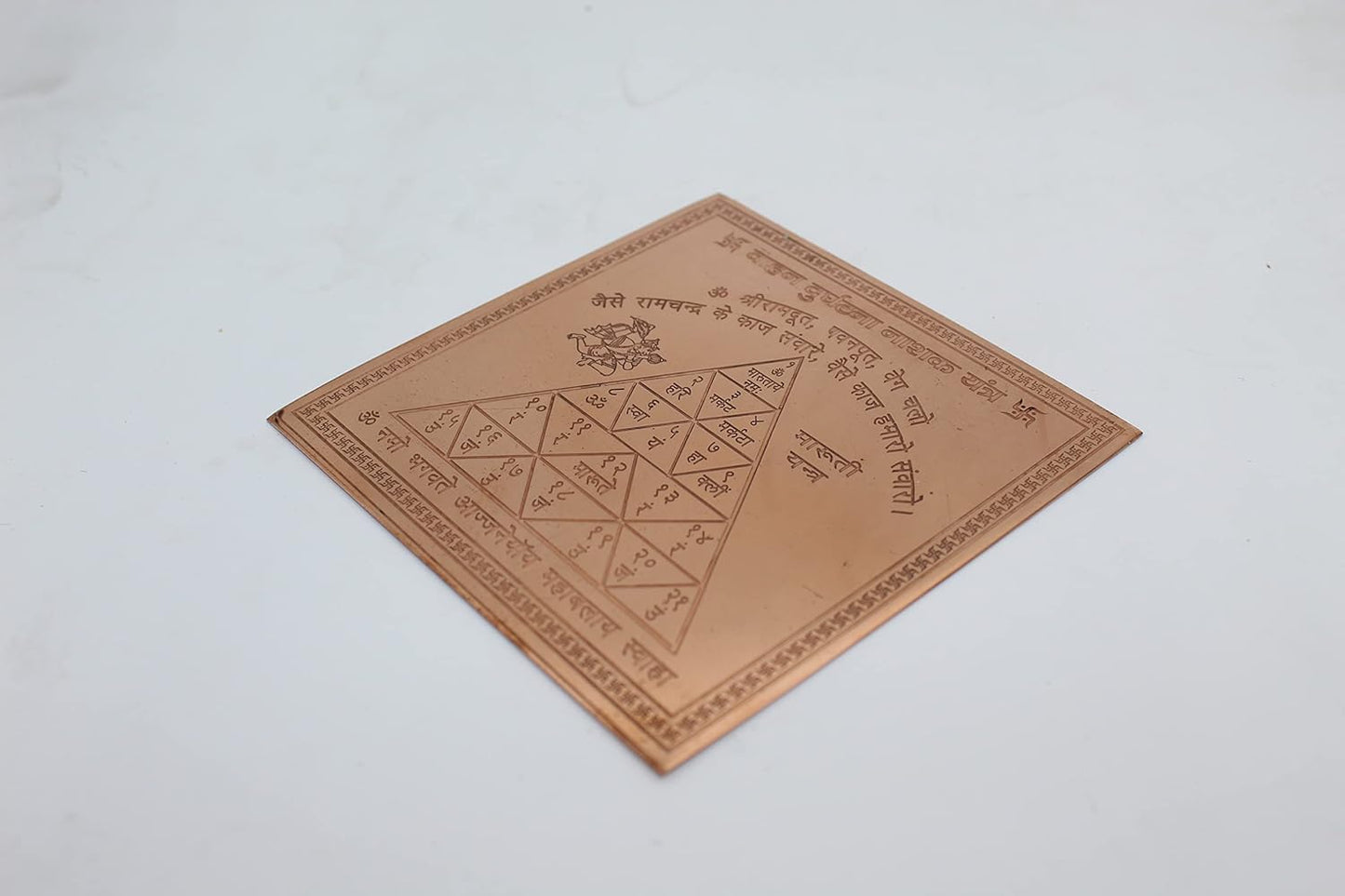
Energised Vahan Durghatna Nashak Yantra
Energised Vahan Durghatna Nashak Yantra
Couldn't load pickup availability

Energised Vahan Durghatna Nashak Yantra
1. Meaning and Purpose
Vahan = Vehicle
Durghatna = Accident
Nāśak = Destroyer / Preventer
Yantra = Sacred geometric diagram
The Vahan Durghatna Nashak Yantra is a protective yantra traditionally used to ward off accidents, mishaps, mechanical failures, and negative influences during travel.
It is especially popular among:
Drivers
Travelers
Transport professionals
Pilots, sailors, and logistics workers (by belief)
2. Presiding Deity & Energy
The yantra is commonly associated with:
Lord Hanuman – protection, alertness, strength
Lord Shiva (Rudra aspect) – destruction of sudden danger
Mars (Mangal) – control of speed, fire, accidents
Different traditions energize it under different divine forces, but protective Rudra–Hanuman energy is most common.
3. Structure and Design of the Yantra
A typical Vahan Durghatna Nashak Yantra contains:
Geometric Elements
Central Bindu – source of divine protective force
Interlocking triangles – control over sudden, aggressive energy
Lotus petals – purity and clarity of movement
Bhupur (square enclosure) – protective boundary
Inscriptions
Protective Beej Mantras
Names of deities such as:
“ॐ नमः शिवाय”
“ॐ हं हनुमते नमः”
Sometimes vehicle-related symbols (wheel, trident)
4. Materials Used
Traditionally made from:
Copper (most common and preferred)
Copper is favored because it is believed to conduct and retain spiritual energy.
5. Meaning of “Energised Yantra”
An energised Vahan Durghatna Nashak Yantra undergoes:
Prāṇa Pratiṣṭhā (invocation of life-force)
Mantra japa
Yantra puja
Sankalpa (specific intention for safety)
Without energisation, the yantra is symbolic; energisation is believed to make it active and protective.
6. Benefits (Traditional Beliefs)
The yantra is believed to:
Protect from road accidents
Reduce severity of mishaps
Prevent mechanical failures
Guard against evil eye during travel
Improve driver alertness and calmness
Reduce fear while drivingThese are faith-based beliefs, not a substitute for safe driving practices.
7. Placement Guidelines
Best Places:
Dashboard (not obstructing view)
Hanging from rear-view mirror
Inside glove compartment
Fixed near vehicle ignition area
Direction:
Facing driver
Yantra should not touch the floor of the vehicle
8. Installation Procedure
Best Day: Tuesday, Saturday, or Monday
Best Time: Morning or vehicle first use of the day
Steps:
Clean yantra with water or milk
Light incense or diya (if possible)
Chant protection mantra 11 or 21 times
Apply kumkum or sindoor
Place yantra in vehicle with devotion
9. Rules & Observances
Keep the yantra clean
Avoid disrespect (throwing, stepping on it)
If broken or damaged, immerse in flowing water respectfully
Periodic mantra chanting strengthens protection
10. Symbolic & Psychological Aspect
Encourages mindfulness and calm driving
Serves as a constant reminder of safety
Helps control anger, haste, and distraction
11. Difference from Other Protective Yantras
| Yantra | Focus |
|---|---|
| Hanuman Yantra | General protection |
| Mars Yantra | Control of aggression and speed |
| Vahan Durghatna Nashak Yantra | Travel & vehicle safety |


Bundle deals


Featured collection
-
Buy Original Indrajal Plant Online | Energised Indrajaal for Protection & Prosperity | White Aura Vastu Store
Regular price From Rs. 1,500.00Regular price From Rs. 1,500.00 Sale priceUnit price perRs. 3,000.0050% -
Original & Energised Siyar Singhi / Gidar Singhi for Black Magic Protection, Wealth, and Fame | Rare Tantric Item for Vastu Dosh Removal & Spiritual Power
Regular price Rs. 4,100.00Regular price Rs. 4,100.00 Sale priceUnit price per -
Energised Copper Budh Yantra
Regular price From Rs. 399.00Regular price From Rs. 399.00 Sale priceUnit price per -
White Aura Vastu Copper Helix Energy Home Office Decor: Activate Balance, Spiritual Energy, Evil Eye Protection - Energize Your Space Copper Helix for South East
Regular price From Rs. 599.00Regular price From Rs. 599.00 Sale priceUnit price perRs. 499.00


Buy Original Indrajal Plant Online | Energised Indrajaal for Protection & Prosperity | White Aura Vastu Store
Buy Original Indrajal Plant Online | Energised Indrajaal for Protection & Prosperity | White Aura Vastu Store



Featured collection
-
Buy Original Indrajal Plant Online | Energised Indrajaal for Protection & Prosperity | White Aura Vastu Store
Regular price From Rs. 1,500.00Regular price From Rs. 1,500.00 Sale priceUnit price perRs. 3,000.0050% -
Vastu Copper Strip (1 Inch) Mahavastu Remedies- 1 Strip Roll
Regular price From Rs. 600.00Regular price From Rs. 600.00 Sale priceUnit price per -
Original Raw Pyrite Bracelet Certified | Attracts Money and Boost Confidence | Astrology Bracelet for Men and Women
Regular price Rs. 499.00Regular price Rs. 499.00 Sale priceUnit price per -
Original & Energised Siyar Singhi / Gidar Singhi for Black Magic Protection, Wealth, and Fame | Rare Tantric Item for Vastu Dosh Removal & Spiritual Power
Regular price Rs. 4,100.00Regular price Rs. 4,100.00 Sale priceUnit price per -
Original Money Magnet Pyrite Pyramid
Regular price Rs. 499.00Regular price Rs. 499.00 Sale priceUnit price per -
Vastu Brass Strip (1 inch) Mahavastu Remedies- 1 Strip Roll
Regular price From Rs. 400.00Regular price From Rs. 400.00 Sale priceUnit price per


